
What Makes a Marriage Last? 3 Habits I See in Couples Who Make It
I’ve watched couples walk into my office and turn their whole marriage around. I’ve also watched couples try just as hard, show up to every session, do every piece of homework, and still end up divorced.
The difference almost always comes down to three habits.
I’m Andrea Dindinger, a licensed marriage and family therapist. I’ve been doing this work for over 20 years. I’ve also been divorced, and I’ve been married to my husband for 18 years. So these are not three habits I read about in a textbook. I’ve skipped them, and I’ve practiced them, and I can tell you they change how you show up in your marriage.
Why most marriages actually end
You’ve probably heard that half of all marriages end in divorce. That number gets repeated everywhere, and it’s more complicated than it sounds. Psychology Today puts the real lifetime risk closer to 42 to 45 percent, depending on how you measure it and who you’re measuring.
Either way, that’s a lot of people who once stood up in front of everyone they loved and meant every word of it.
Here’s what I want you to understand. Those marriages don’t end because two people stopped liking each other. Most of them don’t end because the love ran out. They end because nobody was practicing these three things.
Habit 1: Couples who last build a shared vision
The first habit is creating a shared vision for your life together.
This is easiest to do at the beginning. If you recently got married, sit down and look out at the next 5, 10, 20, 40 years. Map it out on purpose. Some prompts to start with:
Where do we want to live, and does that change over time?
Do we want kids, how many, and what do we want their childhood to feel like?
What does money mean to each of us, and what are we saving toward?
What does rest look like in this house?
Who do we want to be to our parents as they age?
A friend of mine in college said something I’ve never forgotten. It’s not that people plan to fail; they fail to plan.
That’s exactly what happens in a marriage. Couples don’t set out to grow apart. They just never sat down and decided what they were growing toward.
When you have a shared vision, hard decisions get simpler. Should we move for this job? Should we take on this expense? Should we say yes to this commitment? You’re not negotiating from scratch every single time, because you already know where you’re headed. The question becomes much easier: does this get us closer to that or further away?
John Gottman’s research lands in the same place. Shared meaning sits at the top of his Sound Relationship House model, and it gets built out of the rituals, roles, and goals a couple creates on purpose. It doesn’t appear on its own after enough years have passed.
And if you’re 15 years in and you’ve never done this, you’re not too late. You can build a shared vision at any point. It’s often more useful later, because by then you actually know each other.
Try this
Set aside 90 minutes with no phones. You each write down what you want your life to look like in 5 years, 10 years, and 20 years. Then read them out loud to each other. Don’t debate anything. Just listen, and notice where you overlap and where you don’t. That’s the whole exercise. If a blank page feels like too much, start with the logistics you already fight about. 5 Rules to Make Splitting Chores Easier is a good warm-up.

Habit 2: Couples who last choose curiosity over defensiveness
Here’s the moment I’m talking about. Your partner tells you that you did something hurtful, or careless, or mean. Your body reacts before your brain does. You want to explain. You want to give them the context. You want them to understand that you didn’t mean it that way.
That’s defensiveness, and it feels like self-protection. It’s actually the thing that keeps the fight going.
Gottman calls defensiveness one of the Four Horsemen, the communication patterns that predict divorce with unsettling accuracy. His antidote is taking responsibility, even for a small piece of it.
I want to add one step before that. Before you take responsibility, get curious.
Curiosity sounds like this, inside your own head. Huh. I did do that. I wonder why I did it. And I wonder why they’re having such a big reaction to it.
That second question is the important one, especially when you did something you thought was completely innocuous and they’re genuinely hurt. The gap between what you meant and what they felt is worth being interested in. Something is happening for them that you don’t know about yet.
Think about how you talk to a baby who’s babbling at you. You lean in. You say wow, and then what happened? You have no idea what they’re saying and you’re fully interested anyway. That’s the energy. Bring it to your partner.
This one is harder if you’re a man, or if you’re in a relationship with one, because for a lot of men defensiveness got modeled as strength. Stand your ground. Don’t back down. In a marriage, standing your ground in the middle of your partner’s hurt doesn’t protect anything. It just stretches the fight out.
Try this
The next time you feel your chest tighten and the explanation start forming, say this out loud: "Hang on. Tell me more about what that was like for you." Then stop talking. You can explain yourself later, and you’ll want to less than you think. If you want one more word swap that changes how these conversations go, try saying this to your partner.
And if you and your partner have the same fight on repeat, that loop is almost always built out of defensiveness on both sides. My Loop Breaker course gives you five scripts to interrupt it.
Habit 3: Couples who last protect both people’s wellbeing
The third habit is caring deeply about your own wellbeing and your partner’s.
This one sounds soft. It’s the most practical thing on the list.
When you genuinely care about your wellbeing and theirs, a lot of small decisions stop being negotiations. The walk after dinner becomes easy, because you both know it’s good for you. Putting the phone away at the table becomes easier, even though these devices are built to be hard to put down. You’re not fighting each other over it. You’re on the same side of it.
It also changes how things sound. "Hey, have a glass of water, I know you’ve had a couple glasses of wine" can land as controlling, or it can land as caring. The difference is whether you’ve built the habit. In a marriage where you both know the other person is actively looking out for you, that sentence is a kindness. You can even say the quiet part out loud: "I’m not trying to control you. I care about how you feel tomorrow. I’m having one too."
Here’s what I notice in my practice. People are extraordinary caregivers when someone gets sick. Suddenly they’re attentive, patient, tracking every detail. What if you didn’t wait for the diagnosis? You can be that attentive right now, while you’re both well, and it costs you almost nothing.
Try this
Pick one wellbeing ritual you’ll do together this week. A walk after dinner. Phones in a drawer during meals. Lights out at the same time. One thing done four times beats a perfect plan you never start. If you want something that feels less like a chore, try one of these 8 creative date night ideas.

If you’re not doing any of these, don’t panic
Most people aren’t. These habits take consciousness, and consciousness takes energy that most of us are already spending on work and kids and the eleven things due Thursday.
But you don’t have to become a different person to do them. You have to practice.
You’re not going to score the first time you kick a soccer ball, and nobody expects you to. Somewhere along the way we decided marriage was supposed to come naturally, and that needing to practice means something is broken. That’s backward. The couples who practice are the ones who report being happier in their marriages.
Start with whichever one you read and felt something in your stomach about. That’s the one.
Where to start this week
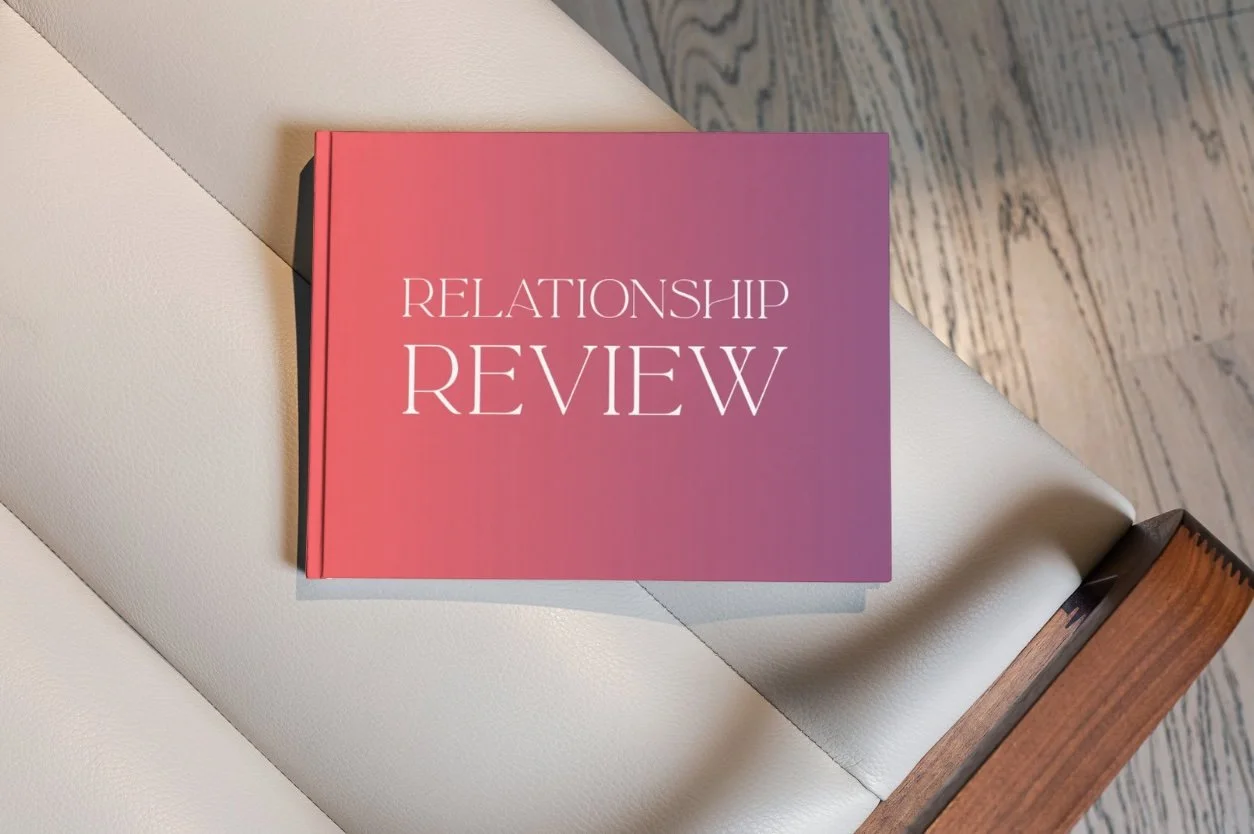
If you want a structured way to do all three, my free Relationship Review is an annual tool you and your partner sit down with together. It walks you through the year you just had, gives you space to build a shared vision for the next one, puts the curiosity habit into practice, and helps you set intentions around taking care of yourselves.
And every week I write a newsletter called Love Forward. It’s where I get into the things that don’t fit anywhere else, and it’ll shift how you think about being present in your relationship.
You don’t need a different marriage. You need three habits and some practice.
Rooting for you,

👉 P.S. Want more ways to shift your communication patterns?
Start here:
Loop Breaker– The toolkit to help stop fights before they spiral out of control
Relationship Review – A free resource to help you reflect, reconnect, and recommit
Take the Connection Quiz – Find out how strong your foundation really is