
Does Every Couple Need Therapy? An Honest Answer From a Couples Therapist
I’m a couples therapist, and I’m going to tell you something that might sound strange coming from me. Not every couple needs therapy.
Some absolutely do, and I’ll be specific about who in a second. But many couples I meet don’t have a therapy problem. They have a skills problem. They’re missing a few things that, once they’re in place, shift the whole dynamic. Sometimes enough that they never need to sit on my couch at all.
Here’s the honest part. Couples therapy is a wonderful tool. It’s also expensive, it’s time-consuming, and a good couples therapist can be genuinely hard to find. In 2026, in-person sessions run roughly $100 to $500 each, and insurance usually won’t cover it unless one partner has a diagnosed condition. People sit on waiting lists for months, sometimes longer. So it’s worth knowing whether you actually need it, or whether you’re missing a handful of skills you could start building this week.
The signs you do need couples therapy
Let me start here, because I never want to talk anyone out of getting real help. If any of these are present, please reach out to a professional. This is what therapy is genuinely for.
Abuse of any kind, including name-calling and other emotional abuse.
Infidelity, or trust that has been broken. And trust breaks in a lot of ways, not just the obvious one.
A season your family is carrying that’s emotionally heavy on its own, like caring for a sick child or an aging parent.
That last one surprises people. You don’t have to be in crisis to benefit from therapy. Sometimes a couple is holding so much for everyone else that they need a third person helping hold the weight while they hold up their family. That is a good and healthy reason to go.
A note on abuse: abuse isn’t a skills problem, and it’s not something a self-help tool or a newsletter can fix. If you’re experiencing it, please reach out to a professional or, in the US, the National Domestic Violence Hotline at 1-800-799-7233 (or text START to 88788). You deserve real support.

The couples who probably don’t need therapy
Now, the other side.
The couples who usually don’t need therapy are the ones who are still genuinely enthusiastic about each other. They like their partner. They want to solve the problems that come up. They’re not trying to escape the relationship; they’re trying to get better at it.
If that’s you, what you likely have is a skills gap, not a crisis. And skills can be learned. Below are the four I’d make sure are in place. If they are, there’s a real chance you handle most of what comes up on your own.
If it’s a skills problem, build these four things
1. A pause word, and a practice of coming back
You need one word that stops a fight before it spirals. A word you both agree on ahead of time that means "I love you, and I’m getting overwhelmed." When either of you says it, the argument pauses. Then, and this is the part that matters, you name a specific time to come back to it, and you actually come back. The pause is only half the skill. The return is the other half. If your fights tend to loop, my Loop Breaker ($17) gives you five word-for-word scripts for exactly this, and only one of you has to use them.

2. The courage and the tools for a hard conversation
Most people avoid hard conversations because they don’t have a way to have them that feels safe. So the frustration and hurt just sit there and leak out sideways. What helps is a structure. One I teach is E.A.R.S.: you Express what you’re feeling on paper first, you Ask your partner to just listen, you Read it to them out loud, and then you Shift together. Writing it down before you speak takes the heat out of it and lets you actually say the true thing instead of the reactive thing. (Download the full E.A.R.S. process in my free Resentment Release guide)
3. A weekly meeting
Sit down together once a week, on purpose. Plan the week ahead. Reflect on what went well. Look further out too, at what you want the next month, the next six months, the next few years to hold. This is where you build the vision for your relationship instead of just reacting to whatever the week throws at you. Click here for a guide on what to say and how to make these meetings happen.
4. One thing you do together every day
Just one. It can be small. Greeting each other with a real hug and kiss when someone walks in the door. A few minutes of actual conversation. My favorite is a walk after dinner, because it’s good for your physical health, your mental health, and your marriage all at once. The point isn’t the activity. It’s the daily, reliable moment of turning toward each other on purpose.
So, do you need couples therapy?
If there’s abuse, betrayal, or a weight too heavy to carry alone, yes, and please go. Therapy exists for exactly those moments, and there’s no shame in needing it.
But if you two still like each other and you’re just missing some tools, you might be surprised how much changes when you build these four skills. A lot of couples never need the couch. They just need the skills nobody ever taught them.
Where to start
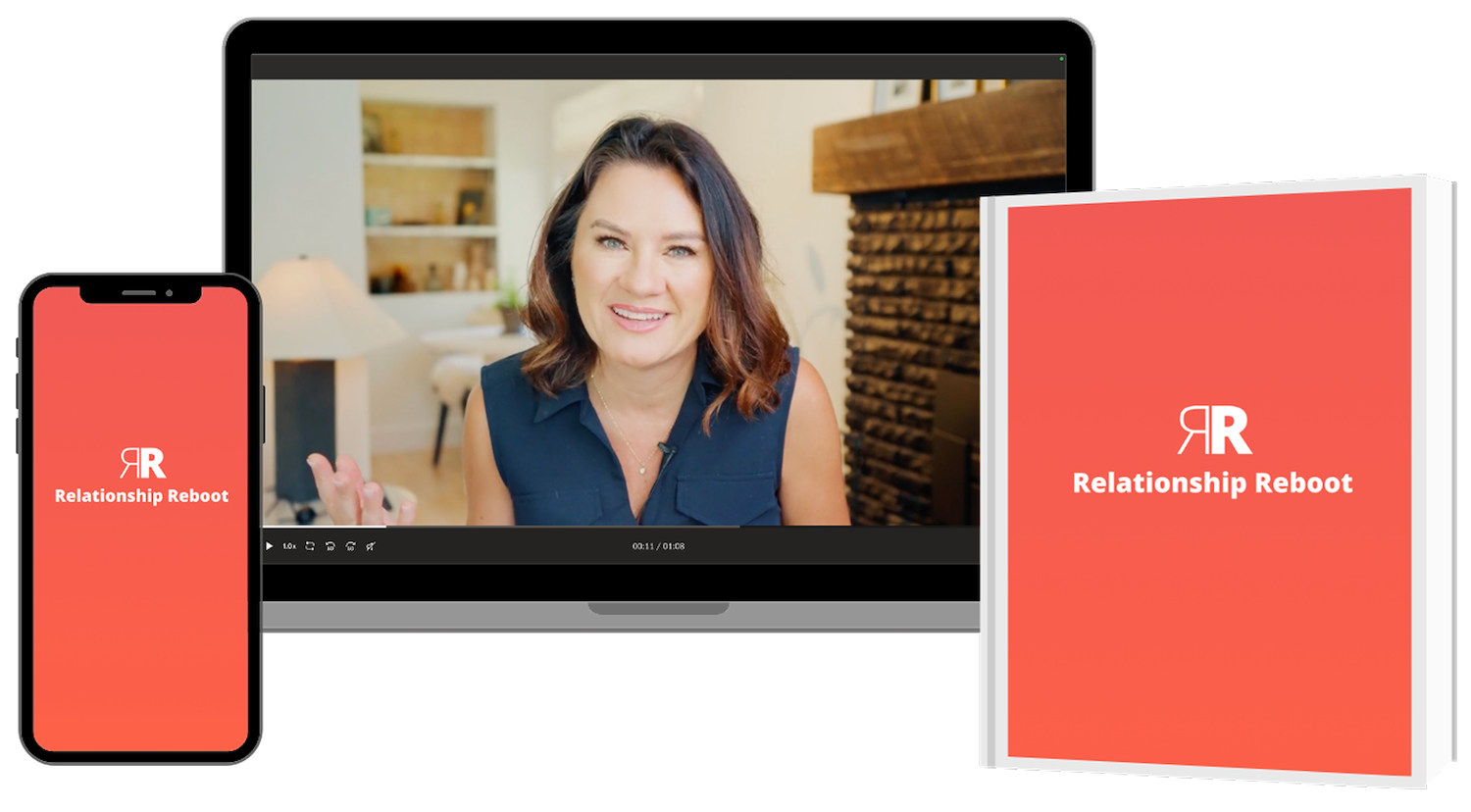
If you want all four of these in one place, taught step by step, that’s what I built Relationship Reboot for. It’s the self-paced course version of the work I do with couples in my practice, so you can build the skills at home before you ever need a therapist.
And if you just want new ideas and a different way of thinking about being in a relationship, with yourself and with your partner, sign up for my free newsletter, Love Forward. It comes out every week.
Therapy is a gift when you need it. But a lot of the time, what looks like a therapy problem is really just a skills problem waiting to be solved.
Rooting for you,
And every week I send a free newsletter called Love Forward. It’s tools and practices for shifting the automatic, habitual patterns in your relationship into something more awake and more loving. Come join us.
The silence isn’t the enemy. It’s a signal. Once you both know how to read it, you stop being afraid of it.
Rooting for you,

👉 P.S. Want more ways to shift your communication patterns?
Start here:
Loop Breaker– The toolkit to help stop fights before they spiral out of control
Relationship Review – A free resource to help you reflect, reconnect, and recommit
Take the Connection Quiz – Find out how strong your foundation really is